


Summer Appeal 2026
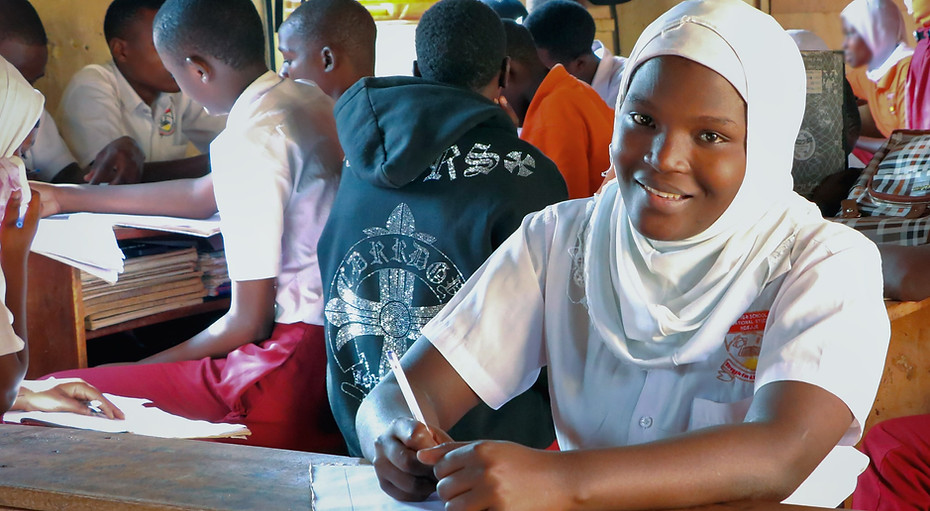
Thank you. The Universal Fund is back, and your gifts are keeping it going.
MORE THAN £35,000 RAISED
This summer, you helped Mildmay Uganda’s Universal Fund support vulnerable children and young people through school, vocational training and apprenticeships. Thank you.
Our summer appeal has come to an end, but the Universal Fund is ongoing, and gifts are still welcome.
72 young people identified for support, [39] already in education or training.
(October 2026)
FAQs
The donation form is loading...
Your gift keeps a young person in school
Donate now to support the Universal Fund:
Secure donation
Other ways to donate
Some functionality is limited because this donation form is embedded in an iframe on our website. Depending on your web browser, simply open it in a new window to use Apple Pay (Safari), Google Pay (Chrome) and so on. If you wish to pay by card or PayPal, you can just continue on this page.


Don't forget to

Problems with this form?
If you encounter any problems while completing this donation form, please get in touch with the Charity Office at
info@mildmay.org, or call us on
020 7613 6311 during office hours (9.30 am to 5.30 pm).

We trust Beacon, our financial partner, to securely process our online payments. You will see their name mentioned on the donation form.
What is the Universal Fund?
The Universal Fund helps orphaned and vulnerable children and young people in Uganda stay in education or learn a trade, supporting them through school, vocational training, or apprenticeships, depending on what will make the biggest difference to their future.
Since restarting in April 2026, the Fund has already identified 72 vulnerable young people for support, and 39 are already in vocational training or education.
What your gift will help us do
-
We are aiming to support 50 young people through school and training in 2027*
-
Helping more young people complete secondary education and vocational training
-
Building towards extending support to primary school children once again
*The team at Mildmay Uganda will update us on this when we receive their second quarterly report in November 2026.
What your gift could achieve
-
£150
Could fund six months of vocational training or an apprenticeship, turning practical skills into income within a short time.
-
£250
Could give one child a full year of primary school; the foundation on which everything else is built.
-
£320
Could give one young person a full year of secondary education, at the stage where falling behind is hardest to recover from.*
Whatever you're able to give, your gift will help another young person gain the education or skills they need to build a more secure and independent future.
Where the Fund goes from here
For two years, reduced funding forced the programme to pause. Like many charities, Mildmay’s support contracted during the pandemic and the wider fall in international aid budgets that followed affected NGOs across the sector.
We were able to restart the programme in spring 2026 thanks to around £10,000 from Mildmay UK supporters, and your summer gifts have built on that. Around forty households are back in the programme, with young people once again completing secondary education, gaining apprenticeships and learning trades.
The Fund has restarted at a smaller scale, so it can grow steadily without being stretched too thin. Every further gift helps it build back towards the reach it once had: more than 2,000 children and young people supported since 2002.
The Universal Fund helps orphaned and vulnerable children and young people in Uganda stay in education or learn a trade. It's been part of Mildmay's work in Uganda since 2002, known until 2017 as the Child Sponsorship Fund.
Working through our longstanding partner, Mildmay Uganda Hospital in Kampala, the Fund identifies orphans and vulnerable children and young people already in their care, assesses each household's needs, and supports them into secondary education, vocational training, or apprenticeships; wherever they are in their journey, and whatever will have the greatest impact on their future. They come from households affected by poverty, bereavement, disability, and serious illness, including HIV.
Every gift helps the Universal Fund continue to fund school fees, uniforms, vocational training, and the mentoring, assessment and health support that surrounds each young person, securing this support for the years ahead.
Case studies

"I always wanted to become a lawyer so that I could defend the rights of vulnerable young mothers in my community."
Supported by the Universal Fund through apprenticeship training and a return to school, Samira is now preparing to sit her Uganda Certificate of Education exams in November 2026 - one step closer to her dream.
Growing up in the Wakiso District of Kampala, Samira lived with her single mother and seven siblings. Like many young people facing economic hardship, she left school to work as a housemaid and help support her family. "I always wanted to become a lawyer so that I could defend the rights of vulnerable young mothers in my community." During Uganda's COVID-19 lockdown, Samira found herself facing an unexpected pregnancy, at a time when schools were closed and support was hard to find. "I felt I had disappointed my mother and lost my future," she recalls. "I did not know what would happen next." Community Health Volunteers working with Mildmay Uganda identified Samira and referred her to Mildmay Uganda Hospital, through an initiative supporting vulnerable pregnant teenagers and young mothers. There, she received antenatal care, psychosocial support and maternal health services throughout her pregnancy, and safely delivered a healthy baby girl. "I delivered my baby with peace of mind. The health workers cared for me with kindness and taught me how to look after my baby. I felt at home." Through the Universal Fund's safe-space programme, Samira enrolled in apprenticeship training, which offers vocational training in fields like tailoring, hair plaiting, and liquid soap production, skills that now help her earn an income and provide for her daughter. She was also reintegrated into formal education, and is currently studying for her Uganda Certificate of Education exams, which she'll sit in November 2026. "I am passionate about my studies and grateful for the support I have received. It has given me a second chance. With the support I have received from Mildmay, I am confident that I will achieve my dream of becoming a lawyer."

"My dream is to become a medical doctor, so I can serve my community and contribute to the fight against HIV and AIDS."
Like Samira, James was identified through the Universal Fund after his family's income collapsed: his mother had died of an HIV-related illness, and his father could no longer afford his school fees. Now a peer HIV educator with Uganda's PIASCY programme*, James is preparing for a different future...
Read James's story and more
*Presidential Initiative on AIDS Strategy for Communication to Youth
Give whatever you're able, and consider giving regularly
A regular gift means we can plan ahead, funding work in Uganda with confidence, not just appeal by appeal. The easiest way to set this up is Direct Debit. Choose monthly, quarterly or annual, and select Direct Debit as your payment method.
Please note: the donation form on this page is for the Universal Fund only. To support all Mildmay's work, go to our main donation page: mildmay.org/donate.
If prayer is how you'd like to support this appeal, you can subscribe to our Prayer Alert.
Where your money goes
Mildmay began as a hospital in the most deprived part of the East End of London, and that work remains our foundation. Around ninety per cent of our UK running costs are met by NHS contracts, and the remaining ten per cent is made possible by people like you.
Our international work is different again: built on more than 30 years' experience overseas, and sustained entirely by charitable giving: donations, grants, and the generosity of supporters like you.
*These amounts reflect the full cost of support, including staff, materials and programme running costs.