Diana, Princess of Wales, and Mildmay
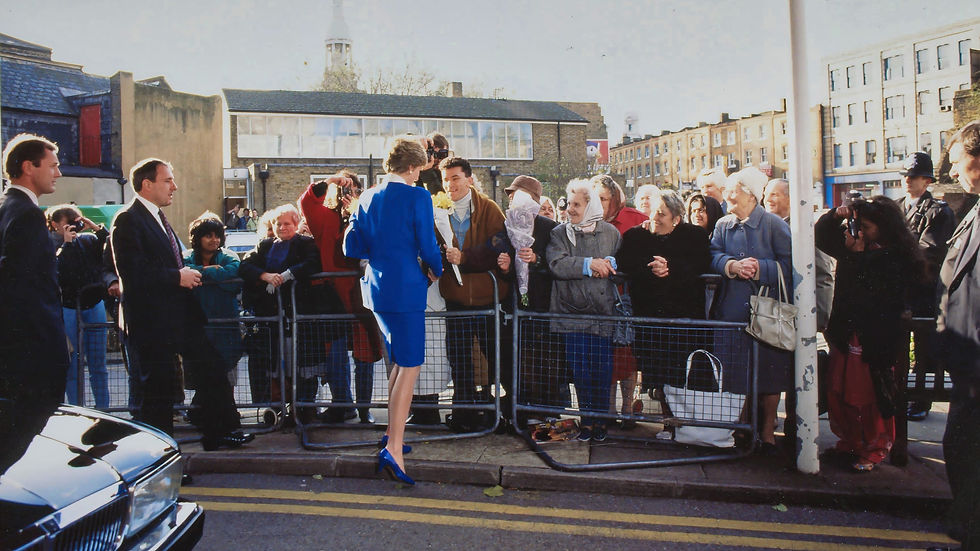
Diana, Princess of Wales, meeting locals outside Mildmay Hospital in 1989
Between 1989 and 1997, Diana, Princess of Wales made seventeen visits to Mildmay Hospital.
Most were unofficial, unannounced, made without press attention. Mildmay was, at the time, Europe's first dedicated AIDS hospice.
Thirty years on, her name still brings people to Mildmay, a hospital with its own story, one rooted in the 1860s, and still evolving today.

Mildmay Hospital around 1990. The main entrance with the canopy under which a Lord's Taverners van is parked - the charity being one of Mildmay's supporters at the time - is where Diana was photographed arriving at the hospital (top of page).
The hospital that said 'yes'
In 1988, the government asked Mildmay to do something almost no one else was willing to do: care for people dying of AIDS.
Elsewhere, healthcare workers refused to treat patients. Families were too frightened to visit their dying relatives. Fear and stigma decided who received care and who was turned away.
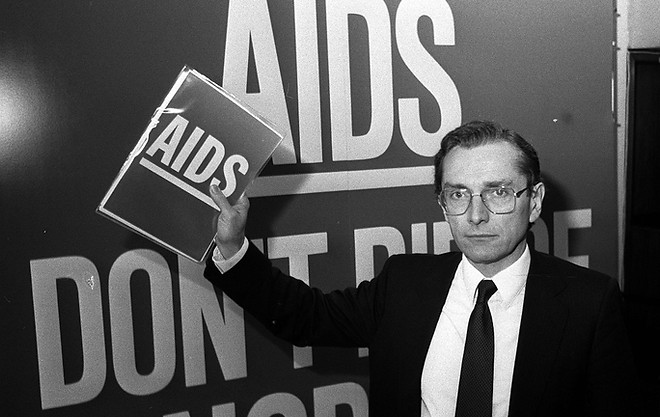
Health Secretary Norman Fowler in 1986, whose AIDS - Don't Die of Ignorance public health campaign helped shift public attitudes, and who later became Mildmay's President.
When the NHS closed Mildmay in the early 1980s, the board, led by its chair, Helen Taylor Thompson, refused to let it go. Mildmay had been founded as a Christian mission hospital serving the poor and marginalised in the 1860s, and that ethos carried through. The hospital reopened in 1985 as an independent charitable hospital, and in 1988 it became Europe’s first dedicated AIDS hospice. When Spencer House, a residential family care centre, was added soon after, Mildmay became the first facility in the world where people with HIV/AIDS could be cared for alongside their families.
Diana was known for going where others would not.
At the Middlesex Hospital in April 1987, Diana shook hands with a 32-year-old man with AIDS, who would only agree to be photographed from behind so he could be anonymous, so great was the stigma.
At a time when many people believed the virus could be passed on by touch, it sent a message no speech could have delivered.
She said as much herself:
'HIV does not make people dangerous to know. You can shake their hands and give them a hug. Heaven knows they need it.'
At Mildmay, she did the same thing many times, in private, without an audience.
Three official visits, fourteen unofficial.
Diana sat with dying patients, held their hands, and talked. She often arrived late at night and stayed into the early hours. Her connection to Mildmay went beyond the visits. She wrote the foreword to A Time to Care, Ruth Sims' account of Mildmay's response to the AIDS crisis.
Three of Diana's seventeen visits were official, and the press came with her. When they did, millions of people saw a princess touching, holding, and sitting beside people with AIDS. For many, this was the first time they had seen anyone do that. But the fourteen visits that weren't filmed may have mattered more.

Diana's foreword to the book, A Time to Care - Mildmay Hospital's response to people with AIDS, by Ruth Sims.

Mildmay Family Care Centre poster on the London Underground, around 1990
When Diana visited Mildmay, she saw a hospital with a clear idea of what care should look like.
Mildmay had been serving the most vulnerable people at the margins of society since the 1860s. What it brought to the AIDS crisis was the same instinct; that people deserved to be treated with dignity, as whole human beings, not as cases to be managed, or in the climate of the late 1980s, feared.
What that care looked like
Nurses and care staff who had chosen this work when many others wouldn’t. A roof garden where patients grew plants, “because they were working with something to do with life,” as Peter Frymann, a Mildmay trustee from the period, recalled. And Spencer House, where families could stay alongside their loved ones, because Mildmay understood that illness does not only affect the person who is ill.
Diana helped Mildmay give that work a voice. But the work came first.


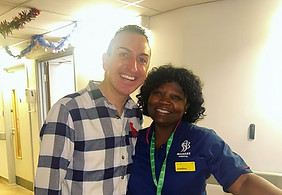
In the photo, Mildmay nurses proudly show off the Mildmay line roundel.
The epidemic Diana witnessed no longer exists in the same form.
But it has not gone away. Most people simply stopped paying attention.
By 1996, combination antiretroviral therapy transformed HIV from a terminal diagnosis into a manageable condition for most people with access to treatment. UK AIDS deaths fell by 80% between 1995 and 2000. In 1999, Mildmay was cited in Hansard as the model of care for people living with HIV/AIDS in the UK.
In London, Mildmay changed with the epidemic. The hospice became a rehabilitation centre. Today it is one of the UK’s leading specialist units for HIV-associated neurocognitive disorder, the lasting effect of HIV on the brain that can leave people unable to walk, speak, or care for themselves. Patients now arrive expecting to recover, and the great majority of them do.
The hospital's work has since grown beyond HIV: during the COVID pandemic, Mildmay took in people experiencing homelessness, discharged from London hospitals with nowhere to recover, and it now runs detoxification and recovery programmes for people with substance and alcohol dependence.
In 2015, Prince Harry, Duke of Sussex opened Mildmay’s current hospital building, purposefully designed to support the care of people living with complex conditions.
Beyond London, the clinical expertise Mildmay built during the AIDS crisis travelled far. From 1993, the hospital worked alongside governments and local partners across East Africa: in Uganda, Kenya, Tanzania, Rwanda, and Zimbabwe, to build HIV care where it was most needed.
Those programmes have since been handed over to local organisations and governments: Mildmay Uganda and Mildmay Kenya now operate as independent, locally registered bodies.
Mildmay’s international work continues, now focused on Uganda, where we partner with communities, hospitals, and NGOs to strengthen essential health services, particularly where access is limited by geography, poverty, or disability.
In 2024, Transport for London named one of the London Overground lines the Mildmay line, the city’s recognition of a hospital that has been part of its story for more than 160 years.

Students at the Mildmay Uganda Institute of Health Sciences
Support Mildmay's work now
Diana’s connection to this hospital has brought you here. The best way to honour it is to support what Mildmay does today.
HIV still falls hardest on those with the least power. In London, over half of women with HIV are still diagnosed late. In East Africa, young women and marginalised communities remain at the highest risk. The epidemic has changed, but it has not ended.
Mildmay stands in the middle of this unfinished story, and has done since 1988. Mildmay delivers its services under contract to the NHS, but that covers only around 90% of the cost of our UK work. The rest depends on people like you.
Diana helped the world to see people living with HIV differently.
Your support helps us carry that change forward: with less fear, more care, and the specialist help that turns survival into a life lived in full.